
Review
The Rookie: A Fresh Take on the Police Procedural
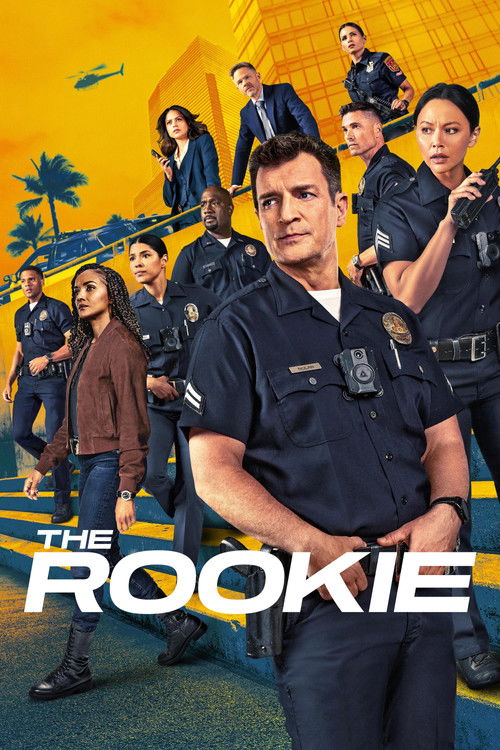
When a show opens with a man in his forties hanging from the side of a building, you know it’s not going to be your standard cop drama. The Rookie wastes no time establishing that this is something different—a series willing to interrogate assumptions about age, ambition, and what it means to start over when conventional wisdom says you shouldn’t. Nathan Fillion’s John Nolan isn’t a washed-up detective or a disillusioned veteran looking for redemption. He’s a man making an active choice to become something he’s never been, and the LAPD—an institution built on precedent and process—doesn’t quite know what to do with him.
The premise alone could have been a gimmick, a one-liner that exhausts itself by episode three. But the show’s strength lies in treating Nolan’s career change as genuinely consequential. He’s not the exception that proves the rule; he’s the disruption that forces the rule to justify itself. The early episodes mine real tension from this setup. His fellow recruits are young enough to be his children. Superior officers view him with a mixture of curiosity and disdain. The police academy doesn’t care that he’s lived a full life before arriving; they care that he can run the distance and pass the psych eval. It’s a leveling that strips away pretense, and the show recognizes this as genuinely uncomfortable rather than merely inconvenient.
Fillion’s Unlikely Anchor
Nathan Fillion carries much of this weight, and his casting proves surprisingly inspired. Known primarily for lighter fare, Fillion brings an understated weariness that prevents Nolan from becoming a caricature of the “cool older guy.” There’s a quietness to Fillion’s performance—a sense that Nolan understands he’s already lived one life and has to be humble enough to live another on someone else’s terms. He’s not wise in that insufferable TV way where the older protagonist is always right. He’s anxious, occasionally stubborn, and genuinely uncertain whether this choice will define him or destroy him.
The supporting cast amplifies this dynamic effectively. Melissa O’Neil as Lucy Chen provides a counterweight—a young cop with her own struggles and ambitions who could easily resent Nolan but instead finds common ground. Their partnership avoids the predictable mentor-mentee trap by acknowledging that they’re learning different lessons from each other. Eric Winter and Alyssa Diaz round out the ensemble with distinct personalities rather than stock types. The show does the unglamorous work of making these characters feel like actual colleagues who spend their days together, annoying each other and occasionally saving each other’s lives.
Crime and Character in Balance
The procedural elements—the cases Nolan and his unit investigate—serve their function competently without overshadowing the character work. Episodes typically open with a crime that needs solving, but the real narrative tension lives in how these investigations affect the people involved. A domestic violence call becomes about whether Lucy will respond with rage or empathy. A shooting becomes about whether Nolan will freeze or act. The crimes aren’t window dressing, but they’re also not the point. The point is what the job does to these people and how they navigate an institution that demands they be professional while asking them to witness genuine human suffering.
The show taps into something that serious police dramas often miss: the comedy inherent in the situation without undermining the stakes. There’s genuine humor in Nolan being the oldest person in the academy, or in his generational references landing with blank stares, or in his earnest approach to physical training. But these moments don’t defang the drama. A scene where Nolan struggles with a particular skill can be funny and still matter because we understand what’s at stake if he fails. The tone is trickier to pull off than it appears—too much levity and the drama collapses into sentimentality; too much darkness and the comedy feels tone-deaf. The Rookie mostly finds the balance.
Themes of Purpose and Persistence
Underneath the procedural structure sits a quiet meditation on purpose. What drives someone to change direction? What makes someone willing to endure skepticism and doubt to pursue something they didn’t always plan for? The show suggests that these questions matter more at forty than at twenty-three, not because the answers are different, but because the person asking has accumulated enough life to know the cost of the answer. Nolan isn’t idealistic in a naive way; he’s idealistic because he’s aware of the alternative—staying stuck.
This thematic core resonates beyond the police procedural format. For audiences who’ve felt trapped by age, expectation, or circumstance, Nolan’s journey offers something rare on television: the suggestion that it’s not too late to choose differently. It’s inspirational without being saccharine, grounded in the actual difficulty of that choice rather than treating it as an automatic vindication.
Verdict
The Rookie is an ensemble police drama that works because it respects both its premise and its characters. It doesn’t pretend the job is simpler or more glamorous than it is, nor does it wallow in cynicism about institutional failure. Instead, it occupies the middle ground where most real work actually happens—where people try to do something meaningful within imperfect systems, sometimes succeeding, sometimes failing, always learning.
The show suits audiences looking for procedural satisfaction without requiring cynical detachment, and those drawn to character-driven narratives about second chances and reinvention. It’s efficient television—never overstaying its welcome within episodes, advancing both cases and character development in the same scenes. For a network crime drama, it consistently punches above its weight, suggesting that sometimes the freshest take on a familiar format isn’t a radical reinvention but simply caring genuinely about the people caught inside it.