
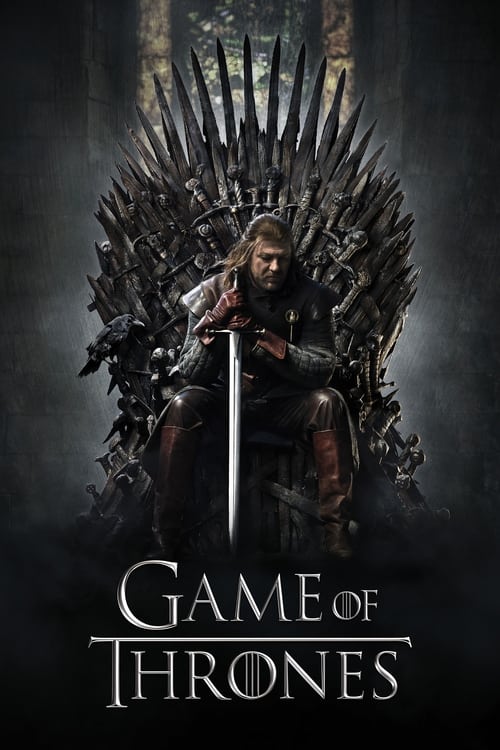
Review
Game of Thrones: A Sprawling Epic That Redefined Television Drama
Game of Thrones arrives as a television event that shatters the conventional boundaries of what fantasy drama can achieve on screen. This is not a show that asks permission to be ambitious—it demands your attention, challenges your assumptions about character arcs, and refuses to play by the rules audiences have come to expect from the genre. For eight seasons, it became a cultural phenomenon that transcended typical viewership, becoming appointment television for millions worldwide.
At its core, the series constructs a narrative of competing powers vying for dominion over the mythical realm of Westeros, but to describe it merely as a tale of political intrigue undersells the scope of what unfolds. The genius of the storytelling lies in its willingness to weave together intimate character dramas with apocalyptic stakes. While noble families scheme and betray one another in pursuit of the Iron Throne, an existential threat emerges from the frozen margins of the world—one that renders their petty conflicts suddenly irrelevant. This structural tension between personal ambition and collective survival becomes the thematic heartbeat that sustains the narrative across its sprawling runtime.
Performances That Anchor the Chaos
The ensemble cast deserves substantial credit for making this world breathe. Peter Dinklage transforms what could have been a supporting role into the moral center of the entire series, delivering a performance of such nuance and vulnerability that he commands attention in every scene. His Tyrion Lannister is witty without being cartoonish, tragic without descending into melodrama. Nikolaj Coster-Waldau brings similar complexity to Jaime Lannister, a character whose arc challenges viewers to confront their own capacity for empathy and forgiveness.
Lena Headey constructs a portrait of ruthless ambition and maternal obsession that feels entirely three-dimensional—her Cersei is fearsome not because the script demands it, but because Headey inhabits the role with such conviction that every calculated move feels like genuine survival instinct. Kit Harington grounds the sprawling mythology with earnest sincerity, while Emilia Clarke brings ethereal intensity to a role that could easily have remained one-dimensional. The younger cast members, including Maisie Williams and Isaac Hempstead Wright, grow remarkably throughout the series, delivering performances that evolve alongside their characters’ transformations.
Craft and World-Building on an Epic Scale
The production design and cinematography establish Westeros as a lived-in world with genuine geographical and political consequence. Locations feel distinct, from the austere stone fortresses of the North to the sensual opulence of King’s Landing. The battle sequences—particularly as the series progresses—showcase some of television’s most ambitious action direction, with large-scale warfare choreographed with both spectacle and strategic clarity.
The show’s narrative structure defies typical television conventions. Death comes unexpectedly and often to characters audiences assumed were central to the story’s resolution. This unpredictability creates genuine stakes—viewers never feel entirely safe, never know which beloved characters will survive to the final season. While this approach generates powerful dramatic moments, it also means the story sometimes sacrifices emotional coherence for shock value, a tension that becomes more pronounced as the series continues.
Thematic Depth Beneath the Spectacle
Game of Thrones explores how power corrupts, how history is written by victors, and whether individual honor can survive in systems designed to reward ruthlessness. The Night’s Watch—a military order of misfits and exiles standing against darkness—becomes a metaphor for those who sacrifice personal ambition for collective survival. The series repeatedly asks whether such sacrifice matters in a world where political players care only for the throne.
Gender and agency emerge as recurring thematic concerns. The show features complex female characters navigating systems designed to limit their agency, forcing them to weaponize femininity, sexuality, or violence to achieve their aims. Some find this approach empowering; others view it as exploitative. The series doesn’t shy away from brutality, including sexual violence, which generates ongoing debate about whether such content serves the narrative or merely sensationalizes trauma.
Audience and Accessibility
Game of Thrones operates most powerfully for viewers who embrace complex, morally ambiguous storytelling. This is not a show that comforts you with clear heroes and villains—it forces you to reckon with the humanity in characters who commit terrible acts and the capacity for cruelty in those you might sympathize with. It demands sustained attention across multiple seasons and rewards viewers who track intricate political dynamics and character histories.
The dense cast and interwoven plot threads make casual viewership challenging. This is prestige television that assumes active engagement from its audience. For those who invest in the world, the payoff is substantial; for those seeking straightforward entertainment, it may feel laborious.
Final Verdict
Game of Thrones stands as a landmark achievement in television storytelling—a series that proved fantasy drama could command critical respect, massive audiences, and cultural significance simultaneously. Its early seasons particularly demonstrate how to balance intimate character work with expansive world-building, how to make audiences genuinely uncertain about which characters will survive, and how to make political intrigue feel as gripping as any battle sequence.
The series ultimately becomes a case study in how ambitious television can inspire passionate engagement and sincere debate. Whether it maintains that excellence throughout its entire run remains a conversation worth having. What’s indisputable is that Game of Thrones fundamentally changed what audiences expect from dramatic television, raising the bar for production quality, narrative ambition, and ensemble performance across the medium.