
Review
Dutton Ranch: A Necessary Reckoning for the Yellowstone Universe
The Yellowstone universe has always thrived on the premise that power corrupts, that legacy demands sacrifice, and that survival often means compromising your principles. Dutton Ranch, the 2026 spinoff that strips away the Montana mystique and transplants Rip Wheeler and Beth Dutton to the scorched terrain of South Texas, leans hard into these themes with a rawness that occasionally feels like a cleansing fire. This is a show about what happens when titans attempt to build something new, only to discover that geography alone cannot erase the gravitational pull of their past.
The central conceit—a power couple fleeing to reinvent themselves in unfamiliar territory—is hardly novel. But what elevates Dutton Ranch beyond its premise is its willingness to interrogate whether redemption through relocation is even possible. Rip and Beth arrive in South Texas with capital, ambition, and the kind of ruthless competence that served them well in Yellowstone. Yet the landscape is different, the rules are different, and most crucially, they are different. Or are they? The series explores this tension with genuine intellectual weight, asking whether two people can truly start over or whether they’re simply doomed to repeat their patterns in a new setting.
Performance and Chemistry
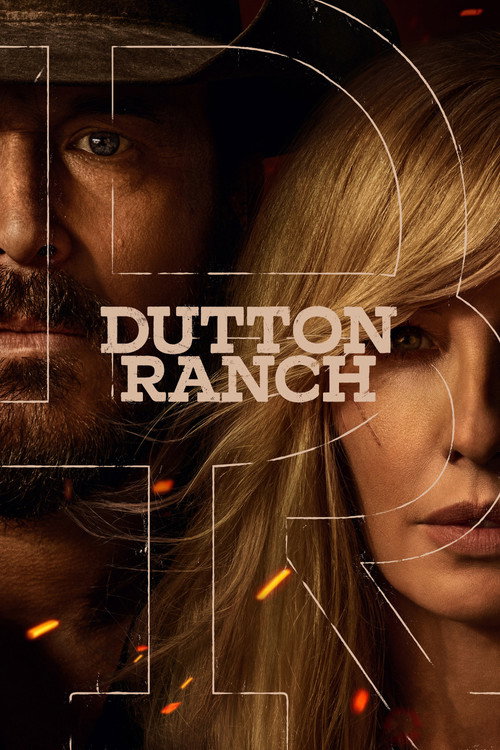
Kelly Reilly and Cole Hauser have spent years perfecting the dynamic between Beth and Rip—a relationship built on mutual respect, shared trauma, and an almost telepathic understanding of each other’s worst impulses. Here, they’re asked to inhabit slightly different versions of themselves. Beth, removed from her father’s shadow and her corporate battlefield, discovers a different kind of hunger: one rooted in creation rather than destruction. Reilly captures this subtle shift with precision, letting vulnerability crack through the armor without ever compromising Beth’s fundamental hardness.
Hauser’s Rip, meanwhile, becomes something closer to a patriarch in waiting—a man learning that loyalty to an ideal might matter more than loyalty to a person. The actor brings a weathered introspection to the role that suggests Rip is actively wrestling with the question of whether he can be more than a tool wielded by others. Their scenes together crackle with the weight of unspoken history, but now charged with something new: the possibility of genuine partnership rather than survival alliance.
The supporting cast slots into place with purpose. Jai Courtney brings a measured menace to what could have been a one-dimensional antagonist, while Marc Menchaca’s work suggests hidden depths beneath a surface of Texas pragmatism. Finn Little, Cole Hauser’s real-life nephew, brings youth and idealism to the narrative, functioning as both audience surrogate and conscience. Juan Pablo Raba adds complexity to the ensemble, playing a character caught between loyalty and self-preservation in ways that force other characters—and viewers—to confront uncomfortable moral ambiguities.
Craft and Atmosphere
Where Dutton Ranch truly distinguishes itself is in its visual grammar. South Texas is not Montana. The landscape lacks the mythic grandeur of Yellowstone’s vistas; instead, it offers something harsher and more intimate—brush country, oil derricks, and horizons that seem to swallow hope rather than expand it. The cinematography leans into this grimness without becoming oppressive, using the terrain as both setting and character. The ranch itself feels less like an idealized sanctuary and more like a foothold that must be defended with constant vigilance.
The production design reflects this tonal shift. Where Yellowstone’s architecture spoke to old money and established power, Dutton Ranch‘s spaces feel provisional, earned rather than inherited. Even the Dutton residence carries a sense of incompleteness, as if Beth and Rip are still decorating rather than settling. It’s a subtle choice that reinforces the show’s thematic core: these people are not building a dynasty; they’re building a fortress, and the difference matters.
Thematic Resonance
The series grapples with contemporary questions disguised in Western vernacular. What does it mean to build wealth in the 21st century? How do old power structures adapt or crumble when transplanted to new soil? Can violence ever be truly justified as self-defense, or is that simply the excuse the powerful always use? Dutton Ranch doesn’t answer these questions neatly, which is precisely why they matter. The show trusts its audience to sit with moral complexity rather than offering cathartic resolution.
The rival ranch isn’t introduced as an obstacle to overcome; it’s presented as a legitimate challenge to Rip and Beth’s assumptions about their own capability and authority. This reframes the conflict from good-versus-evil into something more interesting: two competing visions of power, each convinced of its own righteousness.
Audience Fit and Verdict
Dutton Ranch will resonate most powerfully with viewers who appreciated Yellowstone’s character work over its melodrama, who preferred the quiet moments of moral reckoning to the explosive confrontations. This is a slower-burn series that prioritizes psychological tension over plot mechanics. If you’re seeking a direct continuation of Yellowstone’s soap opera energy, you may find yourself frustrated by the show’s deliberate pacing and refusal to deliver convenient victories.
For those willing to meet the series on its own terms, however, Dutton Ranch offers something increasingly rare: a drama that respects its audience’s intelligence and patience. It suggests that the Dutton legacy doesn’t need to end in Montana, and that sometimes the most important battles are fought not against external enemies, but against the versions of ourselves we’ve already become.
Final Verdict: A worthy continuation of the Yellowstone universe that justifies its existence by asking harder questions and refusing easier answers. Essential viewing for fans of character-driven drama.