
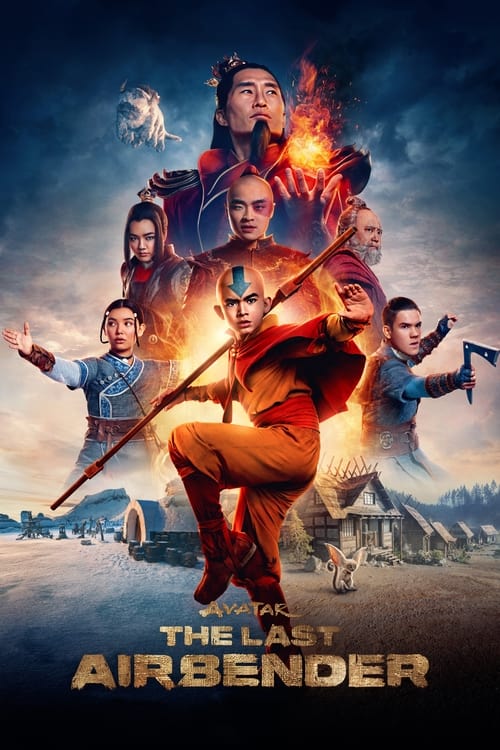
Review
Avatar: The Last Airbender (2024) — A Visually Ambitious Adaptation Struggles to Find Its Soul
Netflix’s live-action reimagining of Avatar: The Last Airbender arrives with considerable expectations and considerable budget. The original animated series remains a cultural touchstone—beloved for its intricate worldbuilding, character depth, and thematic sophistication. This new adaptation attempts to translate that magic to live-action, a feat that requires not just technical prowess but a fundamental understanding of what made the source material resonate across generations. The 2024 series is visually impressive and occasionally moving, yet it stumbles in the places that matter most: the quiet character moments that ground an epic narrative.
Story and Structure: Condensation at a Cost
The premise remains intact: a young Avatar must learn to bend all four elements—water, earth, fire, and air—to restore balance to a world fractured by war. This central conflict carries genuine stakes, and the narrative framework provides ample room for exploration. However, the adaptation compresses the original story significantly, collapsing arcs and rushing through discoveries that once unfolded across multiple episodes. What emerges is a plot that hits narrative beats without always earning the emotional weight behind them.
The first season focuses primarily on Aang’s awakening and his initial training, which provides a sensible entry point. Yet the pacing often feels misaligned—moments of character bonding are sacrificed for action sequences, and philosophical tensions that defined the original are reduced to exposition. The war itself feels present but distant, threatening without being fully realized. By concentrating on plot momentum, the series risks sacrificing the reflective quality that gave the animated show its depth.
Performances: A Cast Finding Its Footing
Gordon Cormier carries the series as Aang with a mix of youthful energy and emerging gravitas. He captures the character’s initial levity and later moments of responsibility, though he’s occasionally let down by dialogue that tells rather than shows. Kiawentiio brings a grounded intensity to Katara, though her character suffers from the condensed narrative—her arc as a waterbender warrior and moral compass doesn’t have sufficient runway. Ian Ousley’s Sokka settles into the comedic relief role competently, landing humor when the script gives him space.
Dallas Liu’s Prince Zuko is perhaps the most intriguing presence. The character’s internal conflict—duty versus conscience—is inherently compelling, and Liu hints at the complexity lurking beneath the surface. However, the adaptation hasn’t yet earned the redemptive arc that makes Zuko so transformative in the original. Miyako rounds out the central cast, though the ensemble hasn’t yet developed the rhythm and chemistry that made the animated team so magnetic.
The supporting cast serves functional roles, but few performances transcend their script. The actors do credible work within the constraints, suggesting potential for growth if the series continues.
Craft and Worldbuilding: Spectacle Over Subtlety
Visually, this Avatar impresses. The production design captures the show’s distinct aesthetic—the rigid geometry of the Fire Nation, the fluid grace of water tribe architecture, the earthen solidity of the kingdom. Costume design and cinematography work in concert to create a cohesive world. Action choreography is generally strong, with bending sequences that demonstrate thought and creativity.
Yet the technical excellence sometimes overwhelms the storytelling. Wide shots of vistas and elaborate fight sequences are beautiful to observe but can feel disconnected from character motivation. The animation allowed the original to balance intimate moments with grand spectacle; this live-action version occasionally forgets that spectacle without character stakes becomes hollow.
The worldbuilding suffers from similar constraints. The four nations exist in the background rather than as fully realized societies. Cultural texture—the specific values, aesthetics, and philosophies of each nation—is suggested rather than deeply explored. This is partly an inevitable consequence of adaptation, but it means the world feels less lived-in than it could be.
Themes: War, Responsibility, and Identity
Avatar has always concerned itself with larger themes: the cost of war, the possibility of redemption, the burden of inherited power, the importance of balance. This adaptation touches these ideas but rarely digs deep. There are moments—particularly in conversations between Aang and Zuko—where thematic tension emerges, yet these threads are often interrupted by plot requirements. The series would benefit from allowing its characters more space to wrestle with moral and philosophical complexity.
The theme of balance, central to the original’s ethos, is more concept than lived experience here. It’s discussed as destiny rather than explored as a state of being that must be constantly negotiated and maintained.
Audience Fit: Familiar and Accessible, But Missing Magic
This Avatar works best for viewers approaching the story fresh or those with casual familiarity with the source material. The spectacle is engaging, and the core conflict is compelling enough to sustain interest. Family audiences will find action and adventure without excessive darkness.
Devoted fans of the original series will likely experience this as a well-intentioned translation that captures the letter but misses some of the spirit. The condensed storytelling removes room for character discovery and thematic nuance that made the original special.
Final Verdict
Avatar: The Last Airbender (2024) is a competent, visually accomplished live-action adaptation that respects its source material while charting its own course. It succeeds as spectacle and as an accessible entry point to this universe. Yet it falters in the spaces between action, where character and theme develop. The performances suggest growth is possible, and the world remains rich with potential. What this adaptation needs isn’t more budget or more effects—it’s permission to slow down, to trust quiet moments, and to let its characters breathe. There’s something worth building here, but the foundation remains incomplete.