
Review
Avatar Aang: The Last Airbender — A Spirited Return to a Beloved World
There’s a peculiar challenge in adapting beloved animated series for new audiences: honor the source material while expanding its universe in ways that feel earned rather than nostalgic. “Avatar Aang: The Last Airbender” (2026) embraces this challenge with surprising grace, crafting a continuation that respects what came before while pushing its characters into unexplored emotional territory. The result is an animated adventure that works both as a standalone story and as a meaningful extension of a legacy that, frankly, deserved better the first time around.
The film’s premise—Aang discovering an ancient power tied to the very extinction of his culture—cuts to the thematic heart of what makes this world resonate. Rather than retreading the hero’s journey we’ve already witnessed, this story asks harder questions: What does redemption look like when you’ve already won? How do you move forward when victory comes at a cost? These are the questions that linger long after the final airbending sequence concludes.
Where the Story Soars
The central mystery of this lost power creates genuine narrative tension. The film doesn’t simply hand Aang another world-threatening crisis to solve. Instead, it tangles him in moral complexity—the very thing that could restore his people might destabilize the fragile peace he helped establish. That contradiction gives the story weight. There’s no clean victory waiting at the end, and the script respects that ambiguity.
The ensemble nature of the quest keeps the emotional focus broad. Aang isn’t shouldering the entire burden alone, which marks a meaningful shift from his earlier isolation. His friendships—tested and deepened—become the film’s actual backbone. The journey matters less than who’s taking it with him, and that’s where the screenplay finds its beating heart.
The Voice Cast and Performances
Eric Nam carries the weight of reprising Aang with a maturity that reflects his character’s growth. Where the original series showed us Aang learning responsibility, Nam’s performance captures someone who’s lived with the consequences of his choices. There’s a gravitas beneath the humor, a weariness that makes his determination feel earned rather than scripted.
Steven Yeun, Dionne Quan, and the returning ensemble bring consistent energy to their roles, though the film occasionally struggles to give everyone meaningful screen time. Dave Bautista’s casting as a major character initially feels like stunt casting, but the script finds ways to use his considerable presence without reducing him to action beats. Freida Pinto brings nuance to what could have been a one-dimensional antagonist, suggesting depth in motivations that the runtime barely has space to explore. Jessica Matten and Román Zaragoza round out a cast that feels genuinely invested in this world.
Dee Bradley Baker’s creature vocals and sound design work remain impeccable—a quiet mastery that often goes unsung in voice-driven animation.
Animation and Visual Craft
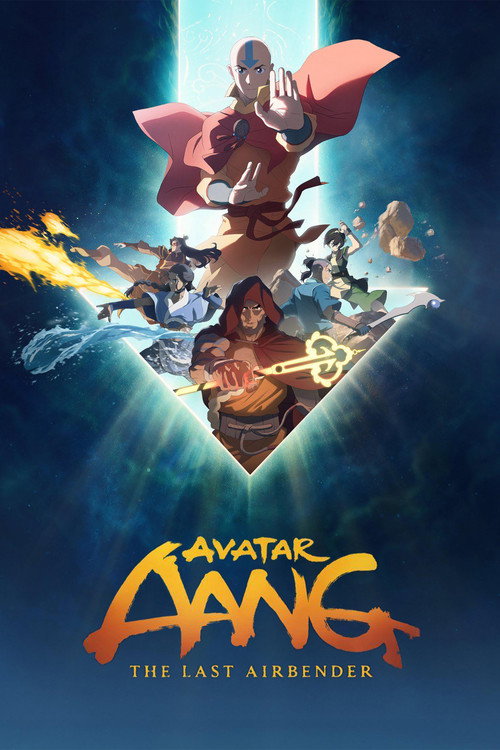
The animation strikes an impressive balance between respecting the original series’ distinctive style and pushing it forward with contemporary technique. Action sequences—particularly airbending combat—feel kinetic and purposeful. Rather than piling on effects, the film trusts that elegant character animation tells the story just as effectively as spectacle.
The world-building visuals are where the craft truly shines. New environments feel lived-in rather than generic, and the cultural specificity of design carries meaning. Water, earth, fire, and air don’t just look different—they feel different through the animation choices. It’s the kind of detail-oriented work that rewards viewers paying attention.
Themes That Resonate
Beyond the surface adventure, the film wrestles with generational responsibility, cultural preservation, and the cost of peace. There’s an undercurrent about what happens when a culture faces erasure—how desperation can corrupt even noble intentions. Aang’s quest becomes as much about understanding his own identity as recovering a lost power.
The script also explores what it means to be defined by crisis. These characters have never known peace without earning it through battle. The question of who they become when the fighting stops—and whether they even remember how to be anything else—gives the adventure genuine psychological weight.
Where It Stumbles
The film isn’t without flaws. At times, the runtime feels like it’s choosing between character development and plot momentum, and not always wisely. A few supporting characters deserve more dimension than they receive. The final act moves with such velocity that some emotional beats land with less impact than intended.
There’s also a risk that longtime fans will find certain creative choices diverge too far from what they remember, while newcomers might feel they’re missing context. The film tries to serve both audiences—not always successfully.
Who Should Watch This
This is essential viewing for anyone who grew up with the original series and has wondered what happened next. But it’s also accessible enough for viewers new to this world. Animation enthusiasts will appreciate the craft on display. Fans of adventure narratives with genuine stakes will find something to grab onto. Anyone interested in stories about cultural identity and the weight of legacy will find substance here.
This is not a film for those seeking simple escapism, though adventure certainly lives here. It demands some engagement, some willingness to sit with uncomfortable questions.
Final Verdict
“Avatar Aang: The Last Airbender” succeeds most where it dares to complicate its own mythology. It respects what came before while refusing to simply repeat it. The animation is beautiful, the voice work genuine, and the story carries emotional weight that extends beyond the runtime.
It’s not perfect—few films are. But it’s the kind of continuation that justifies its own existence, that has something genuine to say about its characters and their world. That’s no small achievement in an era of legacy sequels and nostalgia-driven retreads. This one earns its place.