
Review
Project Hail Mary: A Thrilling Cosmic Adventure That Grounds Wonder in Heart
There’s a particular kind of science fiction that works not because it dazzles with spectacle alone, but because it trusts the audience to care about its protagonist’s survival as deeply as they care about the fate of the world. “Project Hail Mary” is precisely that kind of film—a space opera that understands that the grandest stakes mean nothing without a character worth rooting for, and a mystery worth solving alongside someone we believe in.
The film opens with disorientation as its calling card. Ryland Grace awakens in a spacecraft with amnesia, and director Daniel Espinosa wastes no time establishing the claustrophobia and confusion that defines his first act. This is smart storytelling: the audience experiences Grace’s bewilderment firsthand, and as his memory reconstructs itself in fragments, so does the film’s central premise. By the time the full scope of his mission becomes clear—a desperate race against cosmic extinction—we’re already emotionally invested in how this science teacher, thrust impossibly into the role of Earth’s last hope, will navigate an impossible task.
Ryan Gosling: Everyman Heroism in an Extraordinary Circumstance
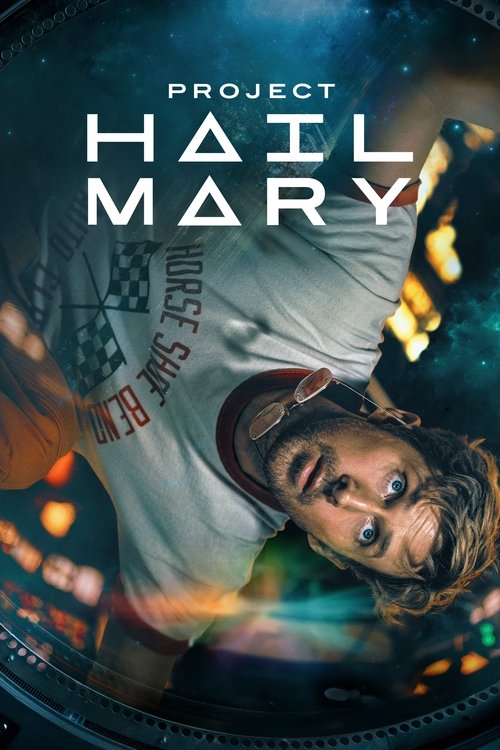
Ryan Gosling has built a career on playing characters caught between vulnerability and capability, and Ryland Grace is perhaps his most crystalline embodiment of that tension yet. Gosling brings a particular kind of rumpled authenticity to the role—Grace isn’t a action hero or a decorated astronaut. He’s a teacher, someone whose expertise lies in explaining concepts, not in surviving extremity. Gosling’s performance captures this beautifully. There’s genuine confusion in his early scenes, not theatrical panic but the befuddlement of someone trying to piece together an impossible puzzle. As Grace’s determination crystallizes, Gosling anchors the film’s later sequences with a quiet urgency; his Grace doesn’t become a different person, just one who has accepted an unacceptable situation and chosen to act anyway.
The supporting cast elevates the ensemble work considerably. Sandra Hüller brings intelligence and warmth to her scenes, creating a dynamic that shifts the film’s emotional center at crucial moments. James Ortiz, Lionel Boyce, Ken Leung, and the ensemble round out the crew with enough distinct personality that their presence matters when it needs to. Milana Vayntrub, Priya Kansara, and Mia Soteriou add texture to the ground-based operations, ensuring that Earth doesn’t feel like a distant abstraction but rather a collection of people making impossible decisions under impossible pressure.
The Craft of Wonder: Visual Storytelling in the Void
Espinosa, working with cinematographer Gavril Saban, understands that space need not be cold or sterile to be magnificent. The film’s production design creates environments that feel lived-in and functional rather than sleek or futuristic in a sterile way. The spacecraft itself becomes a character—cramped, vulnerable, yet somehow intimate. The zero-gravity sequences are handled with remarkable clarity; the camera work makes weightlessness legible without sacrificing the visual poetry of the concept.
The film’s visual effects serve the story rather than overwhelm it. Space sequences feel appropriately vast, and the planetary sequences that anchor the narrative’s scientific mystery carry genuine visual conviction. What’s particularly noteworthy is how the film balances spectacle with clarity—there are moments of genuine cosmic horror and awe, but they never obscure what’s happening narratively. This is a film that trusts its audience to understand the science because it’s explaining it through character and context, not exposition dumps.
Themes That Resonate Beyond the Theater
“Project Hail Mary” engages meaningfully with ideas about sacrifice, ingenuity under pressure, and the ways that human connection can bridge impossible distances. The film doesn’t shy away from asking whether one person’s life should be weighed against billions, nor does it provide easy answers. The central mystery—the unfolding riddle of what’s destroying the sun—is genuinely engaging, constructed in a way that allows viewers to theorize alongside Grace rather than simply watching him solve problems they don’t understand.
There’s also a quietly profound meditation on loneliness and communication embedded in the film’s DNA. Grace’s journey involves not just scientific problem-solving but emotional reckoning with isolation and purpose. The film suggests that understanding—whether of physics or of another consciousness—is itself a form of connection worth fighting for.
Pacing and Narrative Structure
The screenplay balances mystery, action, and character development with admirable precision. The first act’s disorientation could have felt muddled in less capable hands, but the script finds rhythm in Grace’s memory reconstruction. The second act expands the scope while maintaining tension, and the third act delivers on both the emotional and narrative promises the film has built. There are moments where the pacing dips slightly—a few sequences lean too heavily on exposition—but these are minor stumbles in otherwise assured filmmaking.
Audience Fit and Final Verdict
“Project Hail Mary” will appeal most to viewers who appreciate science fiction that prioritizes character and consequence over spectacle. It’s not a quiet film, but it’s a thoughtful one. This isn’t edge-of-your-seat thriller territory, though there are certainly moments of tension. Rather, it’s the kind of science fiction that invites contemplation alongside entertainment—the kind that lingers because it’s asked you to care about ideas as much as outcomes.
The film succeeds because it understands that the most compelling science fiction happens in the space between the extraordinary and the human. By grounding a cosmic catastrophe in the survival instincts and moral calculus of one deeply ordinary man, “Project Hail Mary” reminds us why we tell stories about saving the world in the first place. It’s not about the stakes; it’s about who bears them, and whether we believe in their capacity to change them.
Verdict: A smartly crafted space adventure that earns its wonder through character, conviction, and genuine intellectual engagement. Gosling delivers one of his finest performances, and Espinosa proves himself a skilled steward of intimate sci-fi storytelling on an epic scale.