
Review
Notes from the Last Row: A Descent Into the Blurred Line Between Art and Obsession
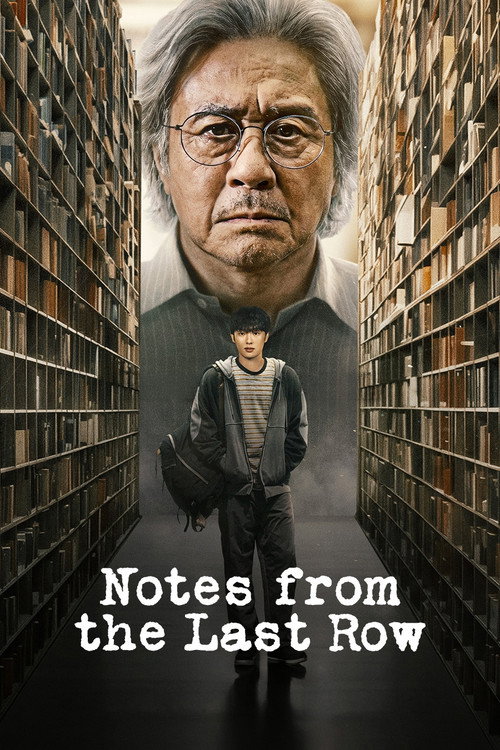
There’s a particular kind of tension that emerges when mentorship becomes complicity. “Notes from the Last Row,” the 2026 mystery-drama directed with careful restraint, doesn’t announce its intentions loudly. Instead, it settles into the classroom like dust—seemingly ordinary, then inescapably invasive. The film tracks the deteriorating relationship between a seasoned literature professor and a gifted but troubled student, watching as the act of teaching unravels into something far more sinister, far less easily categorized.
The premise carries deceptive simplicity: an established academic recognizes raw talent in one of his pupils and takes him under his wing, offering private writing instruction. What unfolds is neither a straightforward corruption narrative nor a story of redemption. Instead, the film occupies the murky middle ground where both men become unreliable narrators of their own entanglement, each session bleeding into the next until reality and fiction—the student’s fiction, specifically—become impossible to distinguish.
Performance as Psychological Archaeology
Choi Min-sik carries the film with the weight of a man who has already made his peace with moral compromise long before we meet him. His professor is charismatic without being charming, accomplished without being secure. There’s a weariness in his performance, a suggestion that the promise of nurturing talent offers him something he’s been missing for years: purpose, perhaps, or the illusion of influence over a malleable mind. He never overplays the character’s darker impulses; instead, they surface through microexpressions, the way he leans into conversations, a certain quality of attention that feels less like mentorship and more like predation wearing an academic’s tweed.
Choi Hyun-wook, as the student, does equally compelling work in the opposite direction. He’s all nervous energy and suppressed intensity, a young man caught between gratitude and resentment, ambition and self-destruction. The two actors create an unsettling dance, one that feels genuinely dangerous precisely because it never becomes overtly violent. Their scenes together crackle with unspoken understanding and mutual manipulation.
The supporting cast—particularly Yunjin Kim, whose presence carries unexpected weight in key moments, and Jin Kyung, who plays a colleague with her own complicated perspective on the professor—add necessary texture to a narrative that could have easily become a two-character chamber piece. Instead, the film opens outward just enough to remind us that obsession never exists in isolation; it always has ripple effects.
Narrative Ambiguity as Design Choice
The film’s central conceit is genuinely clever: we’re reading someone’s reading of someone else’s writing. The student’s fiction becomes the lens through which we interpret events, which means we’re always viewing reality through a fundamentally unreliable filter. Some viewers will find this frustrating. The film resists easy answers about what actually happened, whose account we should trust, and whether the professor is a predatory figure or a man being systematically manipulated by a disturbed young writer.
This ambiguity isn’t a flaw—it’s the entire point. The film suggests that the truth of their relationship might be less important than what each man believes it to be, and what they’re willing to do to defend that belief. It’s the kind of narrative sophistication that demands active engagement from an audience, particularly one willing to sit with discomfort rather than demanding resolution.
Craft and Restraint
Visually, the film favors muted palettes and confined spaces: the professor’s office, the student’s apartment, a university library after hours. The cinematography emphasizes claustrophobia without resorting to obvious techniques. There’s something almost antiseptic about the framing, as if the camera itself maintains clinical distance from the psychological turbulence happening within the frame.
The editing deserves particular mention. Scene transitions blur the boundary between memory, imagination, and present action. A conversation in the office might shift into a scene from the student’s manuscript without clear demarcation, forcing viewers to actively parse what’s real and what’s invented. This formal experimentation could feel gimmicky in less assured hands, but here it serves the thematic content—we’re literally experiencing the dissolution of narrative boundaries that the characters are experiencing psychologically.
Themes That Linger
At its core, “Notes from the Last Row” interrogates the nature of artistic creation and the parasitic potential of mentorship. Who feeds whom in a relationship between teacher and student? Can genuine artistic development exist without some degree of exploitation? The film suggests these relationships are irreducibly complicated, that the power dynamics are always multidirectional, that vulnerability can be both genuine and weaponized simultaneously.
There’s also an underlying meditation on authorship itself—who owns a story once it’s been told, discussed, absorbed into another consciousness? The professor begins reading the student’s work and can’t help but impose his own interpretations, his own needs onto the narrative. By the end, it’s unclear whether the student is writing about his mentor or whether the professor has become a character in someone else’s fiction.
Verdict
This is a film for viewers who appreciate psychological complexity over plot momentum, who find menace more unsettling when it whispers rather than shouts. It’s not a thriller in the conventional sense—there are no twists designed to shock, no surprises engineered for social media discourse. Instead, it’s a slow-burn examination of how two damaged people can damage each other further through the simple act of paying close attention.
“Notes from the Last Row” may not be for everyone. It requires patience, intellectual engagement, and comfort with moral ambiguity. But for those willing to descend into its deliberately murky depths, it offers something increasingly rare: a mystery that trusts its audience, that refuses easy answers, and that understands that the most dangerous stories are often the ones we tell ourselves.