
Review
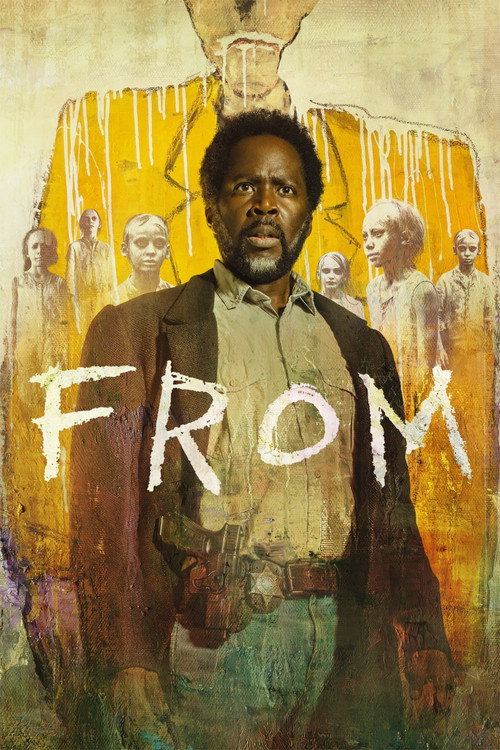
FROM: A Survival Horror That Understands the Weight of Being Trapped
There’s a particular kind of dread that comes from knowing you can’t leave. It’s not the immediate terror of a sudden threat, but the slow, creeping certainty that escape is impossible—that the walls close in a little tighter with each passing day. This is the emotional core of MGM+’s FROM, a series that takes the locked-room premise and expands it into something far more ambitious: a psychological thriller about what happens when an entire town becomes a prison.
The show’s central conceit is deceptively simple. A collection of ordinary people find themselves driving through a small town in rural America, only to discover that the roads loop back on themselves. There is no way out. No cell service. No rescue coming. What begins as a puzzle to solve quickly becomes a nightmare to survive, especially once darkness falls and the forest surrounding the town awakens with something decidedly inhuman.
A Cast That Grounds the Extraordinary
What elevates FROM beyond its high-concept premise is the caliber of its ensemble. Harold Perrineau carries the weight of the narrative with the gravitas of an actor who understands how to play a man watching his certainties crumble. As the de facto leader of the trapped residents, Perrineau conveys both determination and the creeping hopelessness that comes from repeated failed escape attempts. It’s a performance that could easily tip into melodrama, but Perrineau’s restraint keeps it grounded.
Catalina Sandino Moreno brings complexity to a role that could have been one-dimensional, portraying a character caught between maternal instinct and survival instinct. The chemistry between her and Perrineau creates a believable emotional anchor that keeps the ensemble’s personal dramas from feeling like distractions from the larger mystery.
The younger cast members—Ricky He, Chloe Van Landschoot, and Hannah Cheramy among them—avoid the trap of becoming mere victim-scenery. Instead, they’re given agency and interior lives, making their suffering feel consequential rather than performative. Their scenes together have a naturalism that suggests they’ve found genuine connections in an impossible situation, which makes the show’s threats feel more visceral.
Mystery as Sustained Tension
FROM works best when it leans into mystery over explanation. The show understands that questions are more compelling than answers, at least initially. What are the creatures in the forest? Why does this town exist? How long have people been trapped here? These questions accumulate without resolution, and rather than frustrate, they create a mounting sense of dread.
The series resists the temptation to over-explain itself too quickly. Instead, it builds a mythology incrementally, allowing theories to flourish and collapse as new information emerges. This approach mirrors the residents’ own struggle to make sense of their predicament—they’re grasping at explanations just as viewers are, making us complicit in their growing desperation.
However, this strength can occasionally become a weakness. There are moments when the show seems to prioritize mystery for its own sake, leaving plot threads to dangle without sufficient payoff. Some viewers will find this intentional ambiguity refreshing; others may feel manipulated by the withholding of information.
Craft in Service of Atmosphere
The production design creates a convincing alternate America—a town that feels both familiar and wrong, as though you’ve seen it before but something fundamental is off. The cinematography emphasizes isolation, using wide shots to highlight how small and vulnerable the characters are against the vast, encroaching forest. Nighttime sequences are particularly effective, with the darkness becoming almost a character itself, a living threat that the residents must endure.
The creature design avoids the temptation toward camp or overexplanation. What we see of the entities that hunt at night is often fragmented and incomplete, which is far more unsettling than a full reveal would be. Your imagination fills in the gaps, and imagination is always more terrifying than the most elaborate practical effect.
Themes of Community Under Pressure
FROM explores how quickly social order breaks down when survival is at stake. Alliances form and shatter. Trust becomes a luxury people can no longer afford. The show doesn’t shy away from the moral compromises people make when desperation sets in—and it doesn’t absolve them of consequences either. This moral complexity gives the drama weight beyond the surface-level horror premise.
There’s also an underlying meditation on acceptance versus resistance, on knowing when to fight against your circumstances and when fighting becomes counterproductive. The show doesn’t offer easy answers, which is both its greatest strength and, for some viewers, its most frustrating aspect.
Who Should Watch?
FROM is ideally suited for viewers who appreciate slow-burn tension and aren’t demanding immediate answers. If you’re looking for a tidy mystery with everything wrapped up by season’s end, this isn’t it. But if you’re willing to sit with uncertainty, to watch characters grapple with impossible circumstances, and to let atmosphere and character work carry you through stretches where plot momentum slows, the show has much to offer.
Fans of series like Lost, The Twilight Zone, and Dark will find familiar ground here, though FROM stakes its own claim with a focus on the psychological toll of captivity rather than purely fantastical spectacle.
Final Verdict
FROM is a series that trusts its audience and its cast to carry it through extended periods of uncertainty. It’s uneven at times—certain subplots meander when they should propel, and the mythology can feel deliberately obtuse rather than genuinely mysterious. Yet when it works, it creates a palpable sense of being trapped alongside its characters, of sharing in their claustrophobia and dread.
This is television that prioritizes atmosphere and character over spectacle, which makes it both more intimate and more frustrating than typical genre fare. Whether that trade-off appeals to you depends entirely on what you’re seeking from your horror-drama. For those willing to embrace ambiguity and invest in its ensemble, FROM offers something increasingly rare: genuine, sustained unease.