
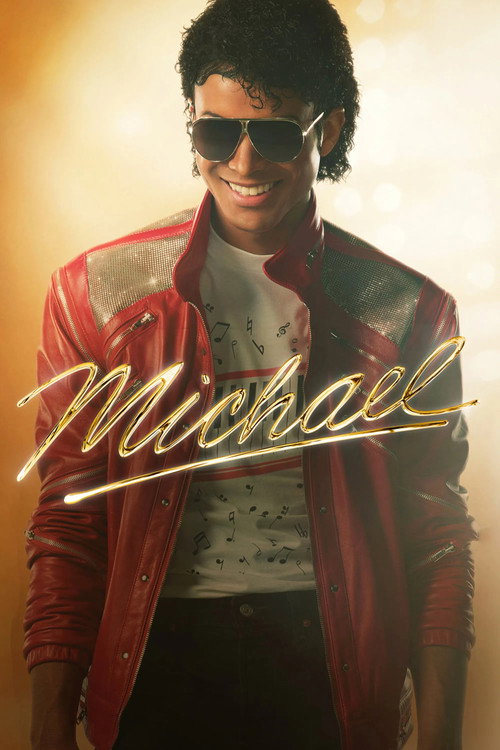
Review
Michael: A Portrait of Ambition and the Price of Greatness
Director Antoine Fuqua’s Michael arrives as a portrait of singular ambition, tracing the trajectory of Michael Jackson from prodigy to icon. Rather than another chronicle of scandal and spectacle, this film zeros in on the internal machinery of genius—the discipline, the vision, and the relentless drive that transformed a child performer into the defining entertainer of his era. It’s a film about the architecture of stardom, built not on tabloid controversy but on the very real cost of refusing to be ordinary.
Jaafar Jackson carries the film with a performance that captures something essential about his uncle: the coexistence of vulnerability and absolute command. In scenes away from the spotlight, Jackson reveals the loneliness embedded in perfectionism. There’s a quiet desperation in his interactions with family members who don’t quite understand the scope of his vision, and a visible strain when the world’s expectations become a second skin. When he steps into performance mode, the transformation is complete—Jackson channels a different entity entirely, one composed of movement and sound and an almost supernatural connection to an audience. It’s a nuanced turn that avoids hagiography while refusing cynicism.
Colman Domingo’s presence as James Brown anchors the film’s thematic core. In their scenes together, Domingo embodies the predecessor whose blueprint Jackson both honors and transcends. There’s mentorship here, but also a quiet reckoning with legacy—the tension between preserving a tradition and obliterating it in pursuit of something unprecedented. Nia Long brings gravitas to family dynamics, while Miles Teller and Kendrick Sampson round out the ensemble with supporting turns that establish the professional and personal stakes at play.
The Architecture of the Story
The narrative structure follows Jackson’s emergence from the Jackson Five through his early solo years, a period when the question wasn’t whether he would succeed, but how far he could push the boundaries of what success meant. The film doesn’t shy away from the pressure cooker environment of his childhood—the control, the expectations, the erasure of normalcy—but it frames these elements as the crucible from which his artistry emerged rather than as the tragedy that destroyed him.
What makes this approach effective is its refusal to separate the man from the artist. The film argues implicitly that you cannot understand Michael Jackson the performer without understanding the boy who learned to channel emotion through choreography because direct expression was never an option. His perfectionism isn’t presented as pathology but as the logical outcome of a system that valued flawlessness above all else. It’s a subtle but crucial distinction.
The pacing is deliberate rather than breathless. This isn’t a film that rushes through his early career to get to the scandals or the peaks. Instead, it dwells in the spaces between performances—the creative meetings, the family tensions, the moment when ambition crystallizes into vision. For viewers accustomed to biopic formula, this approach may feel slow. For those willing to meet the film on its own terms, it becomes meditative, almost hypnotic.
Performance and Spectacle
The film’s recreation of iconic performances—whether from Jackson Five concerts or early solo work—are rendered with impressive technical precision. Choreography is meticulous, costuming is faithful, and the cinematography captures both the intimacy of rehearsal and the grandeur of the stage. These sequences are exhilarating not because they’re flashy, but because the film has earned the emotional weight behind them. We understand what each performance cost, what it meant, why it mattered.
The music functions as dialogue. Rather than underscoring scenes with a score designed to tell us how to feel, the film allows his actual recordings and performances to carry narrative weight. This choice creates an interesting paradox: we’re watching an actor lip-sync to the real Michael Jackson’s voice, yet the effect is oddly intimate. It emphasizes that no recreation, no matter how skilled, can fully capture what the original contained.
Themes and Resonance
Beneath the surface, Michael is examining the mythology of the self-made man and the impossibility of that concept. Jackson didn’t create himself from nothing; he was created, shaped, molded, and pushed toward greatness by forces largely beyond his control. The film suggests that his genius and his trauma are inseparable, not because genius requires suffering, but because in Jackson’s case, they share the same origin point. His drive toward perfection, toward transcendence, toward becoming something more than human—these impulses emerged from an environment designed to produce exactly that.
The question the film poses without ever stating it directly is whether this exchange was worth the cost. The answer it offers is complicated: yes, something extraordinary emerged, but the human being inside that extraordinary talent was forced to surrender elements of himself that can never be recovered.
Audience and Verdict
This film will resonate most powerfully with viewers interested in the creative process, the psychology of perfectionism, and the mechanics of performance. It’s not a conventional biopic designed to appeal to everyone; it’s a character study that happens to center on one of the most famous people in human history. Fans of Jackson’s music will find much to appreciate in its technical accuracy and its refusal to diminish his artistry. Those seeking scandal and salacious detail will find this film deliberately resistant to that impulse.
Michael is a serious, ambitious work that trusts its audience and its subject matter. It’s a film about the price of greatness, rendered with craft and nuance. Whether that’s enough depends on what you’re seeking, but for those willing to engage with it on its own terms, it offers something increasingly rare in contemporary cinema: a meditation on genius that resists easy answers.
Rating: 7.5/10