
Review
Toy Story 5: A Screen Time Battle Rings True for the Digital Age
Pixar’s fifth installment in its flagship franchise arrives at a peculiar cultural moment: a time when childhood itself has been fundamentally reshaped by technology. Toy Story 5 doesn’t shy away from this reality. Instead, it plants its stakes directly in the tension between tangible play and the glowing allure of digital distraction—a conflict that feels less like fiction and more like documentary realism for anyone raising children in 2026.
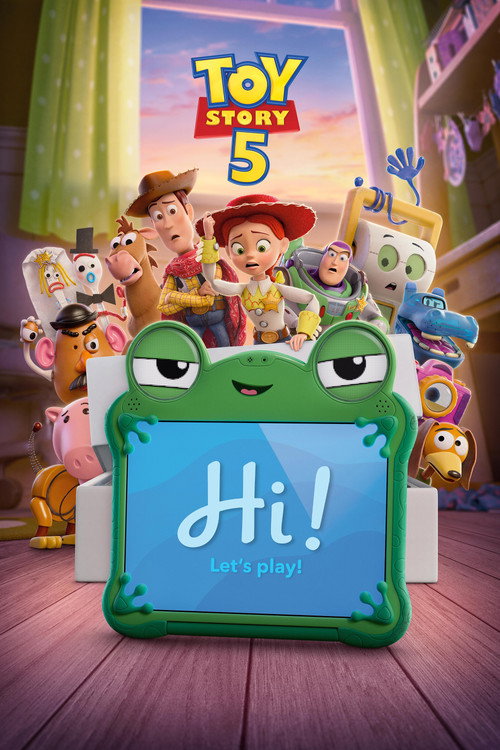
The premise is elegantly simple: Bonnie receives a Lilypad tablet as a gift and becomes absorbed by it, leaving the toys to grapple with an existential crisis. Their purpose—to be played with—suddenly feels antiquated. It’s a clever inversion of the franchise’s central premise. The toys have spent five films proving their worth through increasingly elaborate adventures. Now they must prove their value in a world that has moved on.
A Cast That Carries Weight
Tom Hanks and Tim Allen return as Woody and Buzz with the ease of old friends settling into a familiar living room. Their chemistry remains the emotional spine of the film, though there’s a melancholy edge this time around. Woody’s optimism encounters genuine resistance—not from a rival toy or a lost child, but from apathy. It’s different, and Hanks plays that deflation with understated skill.
Joan Cusack’s Jessie gets more screen time here, and the film benefits from it. Her character has always been the emotional connector, and she serves that function admirably as the toys collectively process their obsolescence. Cusack brings warmth and humor in equal measure.
The newcomer to the voice cast is Greta Lee, whose character represents the bridge between the analog and digital worlds. Her performance carries an authenticity that keeps the film grounded even as its themes flirt with becoming preachy. Conan O’Brien, Craig Robinson, and Tony Hale round out the ensemble with moments of genuine comedic timing, while Shelby Rabara adds another layer to the supporting cast dynamic.
The Comedy Works Because the Stakes Feel Real
What prevents Toy Story 5 from becoming a heavy-handed cautionary tale is its commitment to humor. The film finds comedy not in ridiculing digital distraction but in the absurdity of the toys’ attempts to compete with it. Their elaborate schemes to recapture Bonnie’s attention backfire in ways that feel earned rather than cheap.
There’s a sequence midway through the film where the toys attempt to infiltrate the tablet’s ecosystem that generates laughs while also advancing the plot. It’s the kind of layered writing that has always been Pixar’s strength—jokes that work for children on one level and adults on another.
Craft That Deepens the Story
Visually, the film makes intentional choices about how it renders the digital world versus the physical one. The tablet scenes have a different aesthetic—sharper edges, hyper-saturated colors, a kind of aggressive brightness that contrasts with the warm, naturalistic rendering of Bonnie’s room and the toys themselves. It’s not subtle, but it’s effective. The animation team has created a visual language that reinforces the film’s thematic concerns without requiring exposition.
The score, meanwhile, leans into nostalgia while introducing new motifs that feel contemporary. There’s something poignant about hearing Randy Newman’s iconic themes paired with soundscapes that evoke notification pings and loading screens. It shouldn’t work, and yet it does.
Themes That Extend Beyond the Screen
At its core, Toy Story 5 is asking questions about purpose, value, and relevance in a rapidly changing world. It’s a film about toys, certainly, but it’s also about anyone who has felt the anxiety of becoming unnecessary. The film doesn’t offer easy answers—nor should it.
There’s a subplot involving a character’s decision to let go that feels genuinely earned and moving. The film respects its audience enough to sit with uncomfortable emotions rather than rushing to resolve them through a convenient act of sacrifice or redemption.
What emerges is a meditation on presence in an age of distraction. The toys ultimately learn not that tablets are evil or that analog play is inherently superior, but that genuine connection requires attention—the scarcest resource of our time.
Who Should See This
Parents of young children will find reflections of their own battles in this film. Teenagers may appreciate the film’s refusal to be condescending about technology. Adults who grew up with the original Toy Story will find something bittersweet in watching these characters grapple with irrelevance.
It’s family entertainment that doesn’t require kids to park their brains at the door. The film is occasionally funny, often touching, and genuinely thoughtful about the world children actually inhabit.
Final Verdict
Toy Story 5 could have been a cynical cash grab, a franchise entry made purely because the IP had more to give. Instead, it’s a film with something to say—and the filmmaking craft to say it well. It’s not perfect. Some plot threads feel underdeveloped, and there are moments where the messaging edges toward the didactic.
But it’s a sequel that justifies its own existence. It deepens themes established in previous films while speaking directly to contemporary anxieties. The performances are warm, the comedy lands, and the underlying emotion feels genuine.
For a franchise five films deep, that’s no small accomplishment.